Structuring product roles
at scale
Redesigning how PM, PD and PO work together - from overlapping roles to a complementary operating model
Context
When I joined Manutan, the Product Manager, Product Designer and Product Owner roles all existed - but without clear boundaries or handoff protocols. Each feature team operated differently, responsibilities overlapped, and the lack of a shared operating model was creating friction at every stage of delivery. The organization relied heavily on external contributors to compensate for internal misalignment.
15
people onboarded
15
people onboarded
Challenge
How do you redesign the way three distinct product roles work together - without imposing a theoretical framework that doesn't fit the culture, and without disrupting ongoing delivery?
3 roles
redesigned
3 roles
redesigned
My Role
Mandated by the Product Director to lead a full review of the product operating model. I audited existing workflows across all feature teams, redesigned roles, rituals, deliverables and handoff protocols from scratch, then led the onboarding of all three disciplines - PM, PD and PO - across the organization.
Adopted
by leadership
Adopted
by leadership
What I Did
Audit
Audited how each role was being practiced across feature teams - identifying overlaps, gaps and points of friction
Role redesign
Rewrote role definitions, responsibilities and boundaries for PM, PD and PO
Rituals & deliverables
Redesigned all rituals and deliverables in Jira and Figma to reflect the new model
Macro workflow
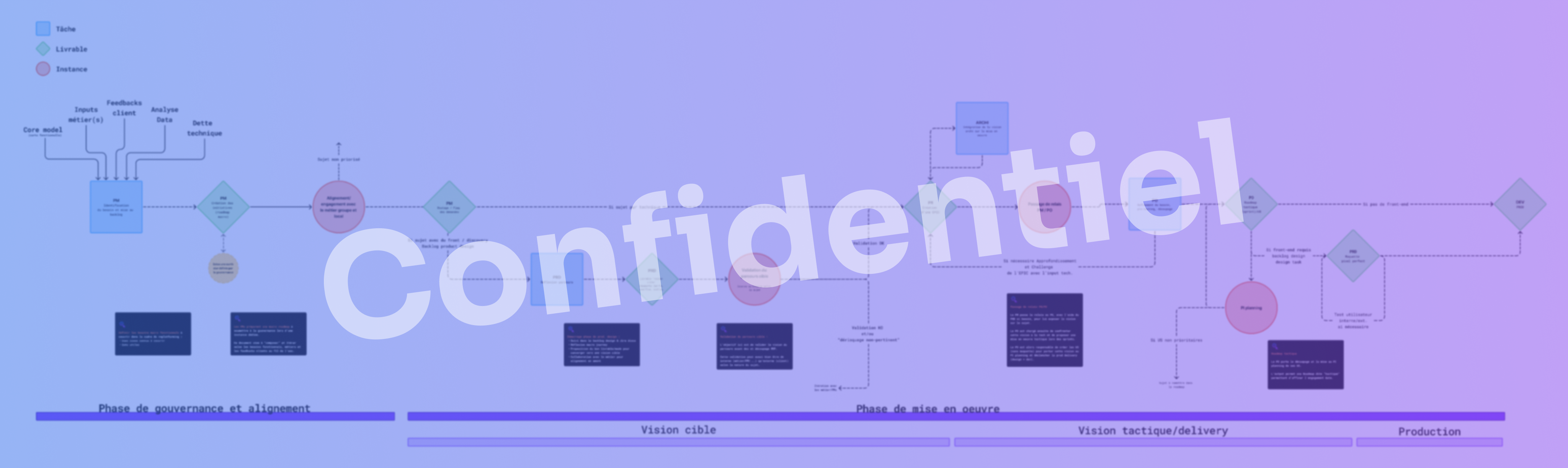
Built a macro workflow to make the operating model legible for non-product stakeholders
Onboarding
Ran onboarding sessions with all 15 people across the three disciplines
Leadership buy-in
Presented and secured buy-in from the Product Director and senior leadership
Operating model - macro workflow
Outcome
The new operating model was adopted across all feature teams. Role boundaries became clear, handoffs became consistent, and the complementarity between PM, PD and PO improved measurably. Leadership - who had previously struggled to distinguish between the three roles - validated the approach and used it as a reference for future hiring and team structuring. Reliance on external contributors decreased as internal teams gained in confidence and legitimacy.