Designing the first AI layer of an enterprise SaaS
XTEL / Kantar Group
Context
Enterprise RGM tools are powerful but intimidating. The complexity was a barrier on two fronts:
During ideation, I suggested that an AI layer could solve this - reducing friction for users while strengthening the product's market position.
Challenge
We weren't certain how clients would react. Two open questions:
The prototype was there to test appetite, nothing more.
Approach
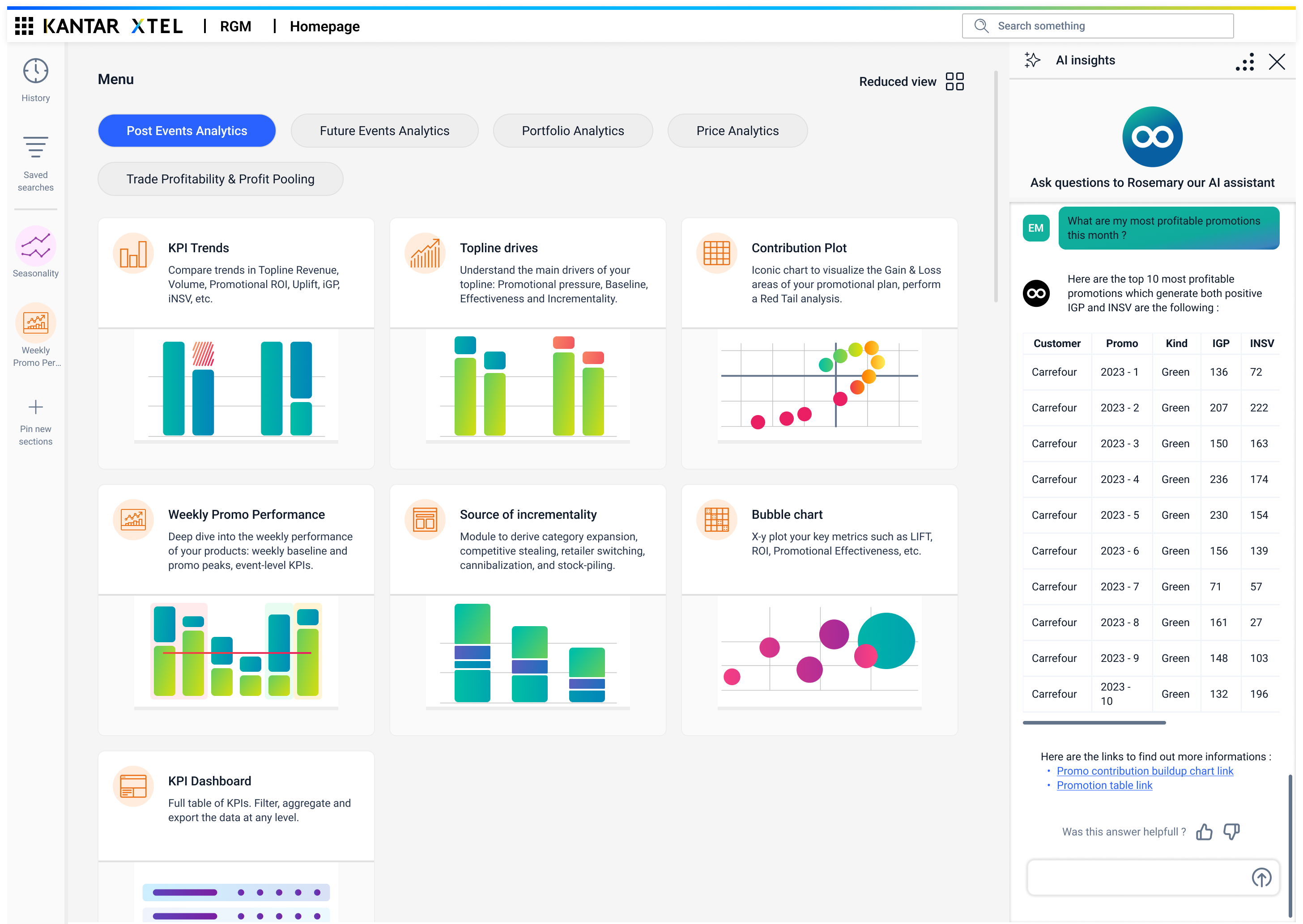
Built a high-fidelity prototype of the AI assistant to test user appetite for the feature. No underlying AI logic, no engineering - just the interaction, designed to feel real enough to get genuine reactions from users.
Quick demo
The AI assistant embedded in the RGM tool - from first prompt to actionable insight.
Outcome
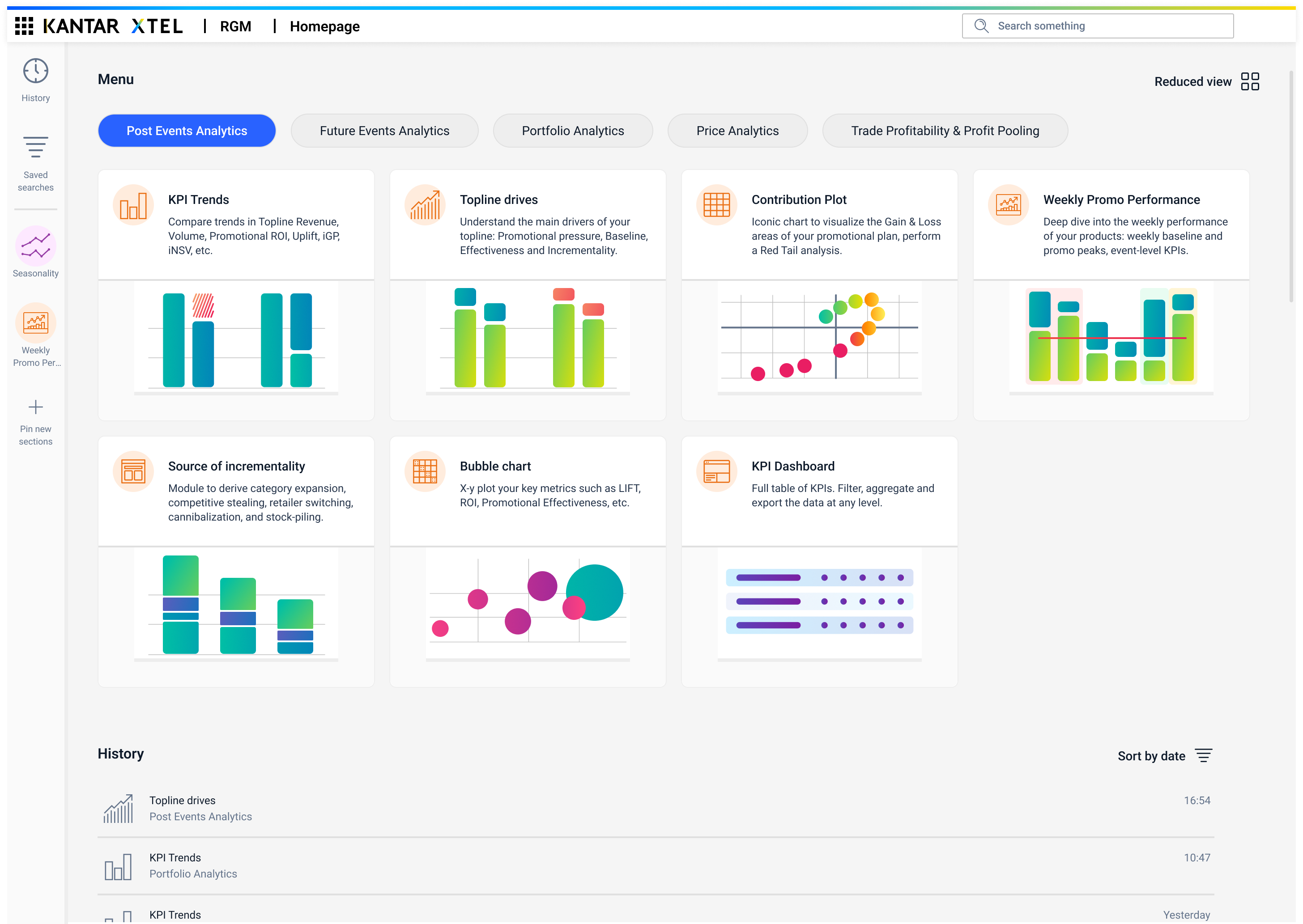
User enthusiasm was immediate. The concept proved conclusive - users didn't just understand it, they wanted it. XTEL has since rebranded the assistant as ADAM and made AI the central pillar of their go-to-market strategy. What started as an unproven prototype is now a core product differentiator used daily by global CPG brands.
My Role
Identified this axis as a way to solve a known user pain, designed the prototype, and ran the quali testing.